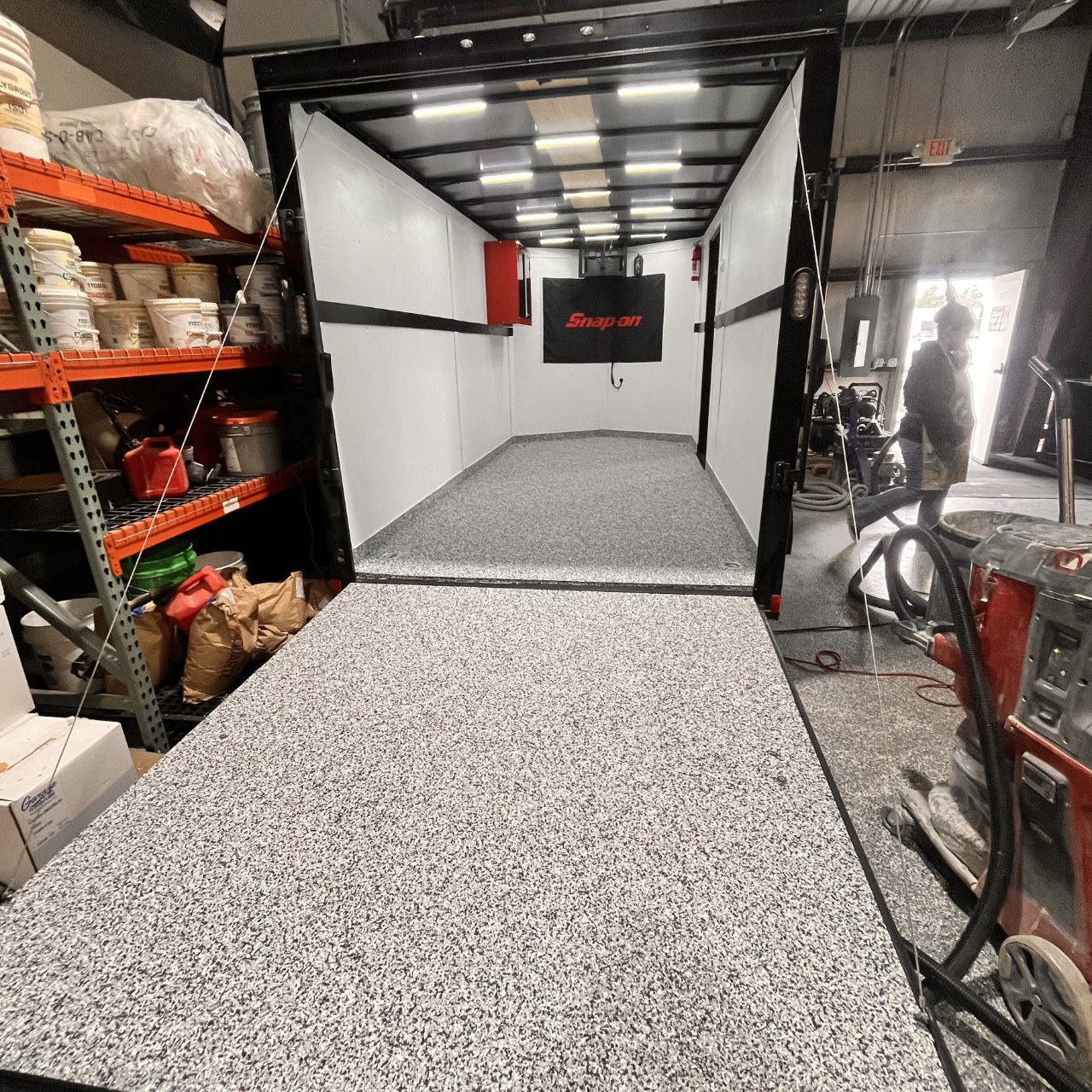
Paint Was Never Built for This
Enclosed trailer floors take a beating that most surfaces never see: constant loading and unloading, moisture tracked in from outside, chemical spills, road vibration, and in a lot of cases, the weight of vehicles or heavy equipment rolling across bare plywood. A coat of porch and floor paint — even a good one — just isn't engineered for that.
What Actually Happens to Painted Trailer Floors
- Peeling at high-traffic zones: Ramps, tie-down points, and load paths wear through paint within months, exposing bare wood again.
- Moisture damage: Paint doesn't seal plywood the way a proper coating system does. Water gets in through worn spots and starts rotting the deck from the inside.
- No real chemical resistance: Oil, gas, brake fluid, and cleaning chemicals break down standard paint quickly, especially on car hauler and shop-equipment trailers.
- Slippery when wet: Smooth paint offers little traction, which matters a lot when you're moving heavy cargo in the rain.
What a Real Trailer Coating System Does Differently
Our trailer coating system starts with proper surface prep — cleaning and, where needed, light grinding to give the coating something to actually bond to. From there we apply a professional-grade polyaspartic/polyurea system, the same family of coatings we use on garage floors, built to handle constant abrasion rather than just look good on day one.
Who This Matters Most For
Cargo trailer owners hauling tools and equipment, car haulers dealing with oil and fluid drips, concession and food trailers that need an easy-to-clean, moisture-sealed surface, and toy haulers carrying ATVs or motorcycles all see the biggest difference. If your trailer floor takes real abuse, painted plywood is a temporary fix at best.
Get It Done Right
A properly coated trailer floor holds up for years, not months. If your trailer deck is looking rough or you're outfitting a new one, get a free estimate — most trailer floors are completed in a single day.